
CleverSpeed Resources
SASE Architecture Explained Benefits and Use Cases
← All resources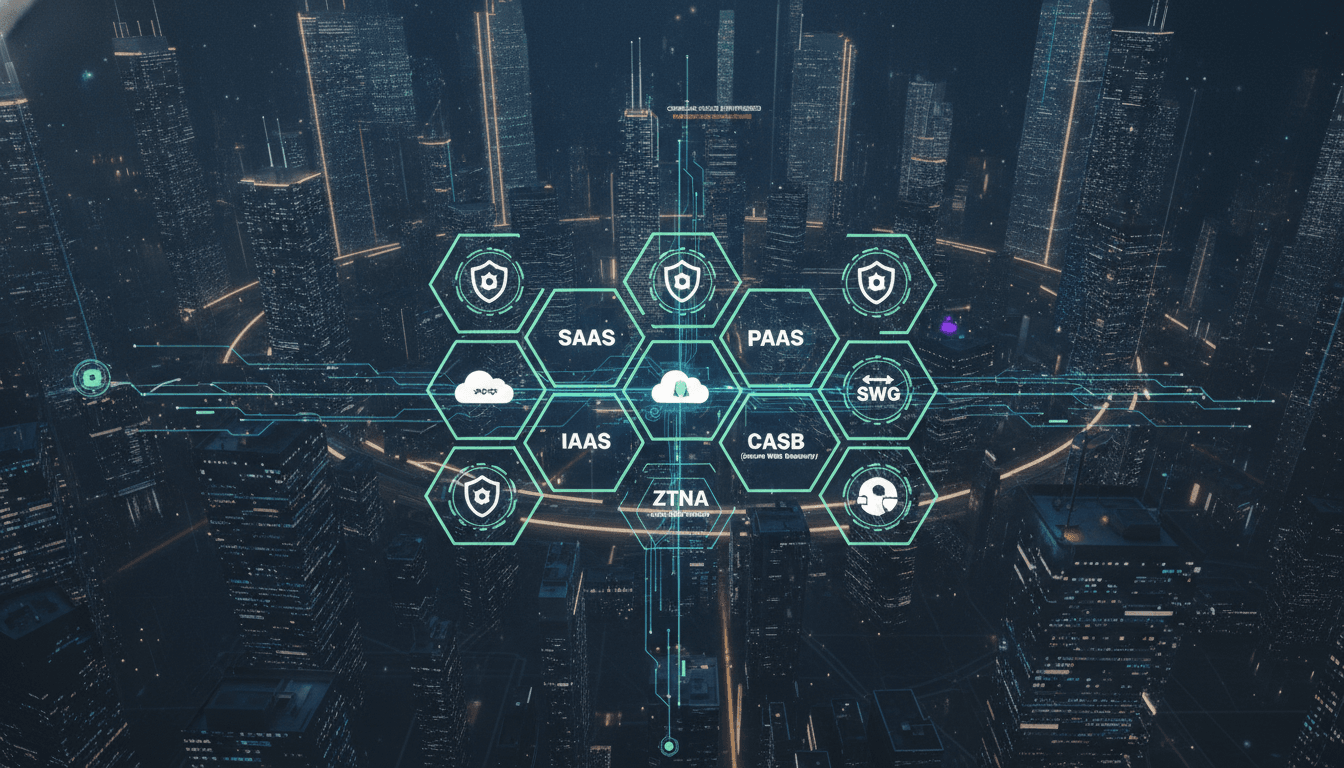
Can a single, cloud-first model truly let global teams securely reach apps and data without routing everything back to a central data center?
We believe it can. In this guide we explain how a secure access service edge unifies networking and security into a single, cloud-native service edge that scales with modern demands.
By combining SD-WAN with SWG, CASB, FWaaS and ZTNA, the access service edge model moves security closer to users and applications; this reduces latency and simplifies traffic management.
Our analysis shows that the secure access service approach replaces scattered point products with a unified service that gives teams visibility, control, and compliance-ready security.
Targeting enterprises in Singapore and beyond, we focus on practical benefits, key use cases, and migration guidance so you can evaluate solutions for sovereignty, performance, and operational management.
Key Takeaways
- The access service edge delivers unified security and networking at the cloud edge.
- Secure access follows users, protecting applications and data without backhauling.
- Consolidating services reduces operational complexity and improves visibility.
- Cloud-native design scales for distributed users and global traffic patterns.
- Adopting this model supports compliance and sovereignty goals for enterprises.
Understanding the Modern Need for SASE Architecture
As workloads leave the data center, organizations need a new model that secures access everywhere. According to the 2025 State of Cloud Report, 92% of workloads now run on cloud platforms; this shift makes perimeter defenses brittle and slow.
We see the access service edge market expanding rapidly, with Gartner projecting strong growth through 2027. That market signal reflects urgent demand for a cloud-native way to manage network and security together.
Visibility and consistent policy are central. When users, applications, and data live across cloud services, the secure access service approach gives teams the control to route and inspect traffic near the edge.
Our consultative practice helps enterprises move beyond legacy infrastructure and reduce operational overhead. For multi-site WAN and global deployments, consider our guidance on multi-site WAN design to align connectivity, sovereignty, and performance: multi-site WAN design.
- Cloud-first workloads require distributed security controls.
- Service edge placement reduces latency and simplifies management.
- Moving to this model is a strategic necessity for Singapore enterprises seeking compliance and resilience.
Defining the Core Components of the Framework
To secure distributed users and cloud apps, we assemble five core controls into a single, enforced service plane.
Secure Web Gateway and Firewall
Secure Web Gateway (SWG) and Firewall as a Service provide inline protection for web traffic and east‑west flows. We apply URL filtering, threat prevention, and stateful packet inspection close to users to reduce latency and central backhauling.
Scalable FWaaS replaces expensive hardware; it enforces consistent policy across locations and gives teams unified logs for compliance.
Cloud Access Security Broker
Cloud Access Security Broker (CASB) tools enforce cloud access security and data loss prevention across sanctioned applications data.
We use CASB to map risk, control shadow IT, and apply DLP rules that protect sensitive records while preserving productivity.
Zero Trust and SD‑WAN
Zero Trust Network Access (ZTNA) and software‑defined wide area networking combine to deliver granular network access and resilient connectivity.
ZTNA verifies each user and device continuously; SD‑WAN routes traffic optimally to the nearest service edge. Together they eliminate lateral movement and simplify traffic management.
- The framework relies on SWG, FWaaS, CASB, ZTNA, and SD‑WAN.
- We deliver consistent secure access across cloud and on‑prem infrastructure.
- For managed connectivity and firewall options, consider our managed firewall bundle.
How the Architecture Transforms Network Security
Placing enforcement at the service edge reshapes how we protect users and cloud applications.
We move the perimeter to the cloud so security services sit close to users and the apps they use. This reduces latency and avoids routine backhauling to central data centers.
The security service edge provides consistent visibility and real-time inspection of traffic across ports and protocols. That visibility helps detect threats earlier and enforces data protection uniformly across regions, including Singapore.
By consolidating networking security into a single, cloud-delivered service, we cut operational complexity and remove disparate point products. Teams gain unified logs, policy consistency, and simpler management of networking and security.
Our consultative approach maps risk, configures continuous threat prevention, and optimizes routing so performance and compliance coexist. We implement a secure access service framework that treats the network as a dynamic, high-performing asset.
- Enforced controls near users for lower latency and better detection.
- Real-time inspection for all traffic; fewer blind spots.
- Unified service edge reduces operational overhead.
For a concise primer on the underlying model, see what is SASE and how it profiles access and services.
Key Benefits for Distributed Enterprises
Placing enforcement and control closer to users transforms how applications perform and how teams work.
Enhanced User Experience
Routing traffic to the nearest cloud point reduces latency and improves application responsiveness for remote teams in Singapore and across APAC.
Zero trust network principles ensure access is both fast and verified; users see fewer interruptions and fewer authentication bottlenecks.
We integrate cloud access security and secure web gateway functions at the service edge so applications data remains protected without slowing workflows.
Operational Cost Reduction
Consolidating security services into a single, cloud-delivered access service eliminates many on‑premises appliances and cuts capital expense.
Our secure access service model reduces operational burden; teams manage policies centrally and recover faster from incidents.
- Lower CapEx by removing legacy appliances.
- Reduced OpEx through unified policy and automated updates.
- Improved management of network access and networking security across sites.
Partnering with us ensures your deployment delivers measurable gains in network security and a superior user experience. Learn about our managed SD‑WAN and multi‑site approach with this resource: managed SD‑WAN for multi-site deployments.
Primary Use Cases for Modern Organizations
Organizations demand secure, low-latency access that follows users to the nearest service point.
Powering hybrid work and global connectivity. We connect distributed teams to nearby PoPs so traffic travels a shorter path; this reduces latency and improves user experience for offices in Singapore and across APAC.
Rapid MPLS to SD‑WAN migration. Our digital transformation practice moves customers from MPLS to software-defined wide area networking in days or hours, not months, while preserving network security and continuity.
Protecting branches and retail sites. The secure access service framework enforces consistent policies across locations; access applications and cloud services remain guarded by cloud access security and secure web functions.
For organizations that need to optimize bandwidth and scale security services, the access service edge delivers dynamic security without backhauling to a central data center. We use the sase model to tune performance and manage traffic near the edge.
- Hybrid work and global user access to nearby PoPs.
- Fast migration to SD‑WAN with improved network security.
- Consistent protection for branches, retail, and cloud services.
Navigating Potential Implementation Challenges
Practical rollouts often stall on people and process, not on tech.
Redefining Team Roles and Collaboration
We guide organizations through the change in responsibilities that comes with an access service edge. Network and security teams must share policy ownership and incident workflows.
Clear role definitions reduce handoffs and speed incident response. We run workshops to align networking, security, and cloud teams on configuration, monitoring, and compliance tasks.
Vendor integration adds complexity. We map vendor responsibilities to your governance model and test integrations before broad rollout.
- Implement zero trust network access gradually; validate with pilot users.
- Consolidate tools to avoid sprawl and preserve consistent network security controls.
- Train staff on new management planes and service edge operations.
Our consultative approach includes technical runbooks, role-based training, and a sovereignty-aware operations plan for Singapore. For resilient connectivity patterns and provider options, see our high-availability connectivity resource.
Strategic Considerations for Selecting a Provider
A provider’s global footprint and operational model often decide real-world user experience more than feature lists.
We start by verifying the provider’s network of PoPs; a dense global presence reduces latency for users in Singapore and improves application responsiveness.
Prioritize integrated secure access services over vendors that sell loosely coupled tools. Integration reduces policy gaps and simplifies management.
Confirm zero trust capabilities and support for granular access security policies; these controls must work across cloud access and on‑prem systems.
- Check compliance certifications for secure web and cloud access services against your regulatory needs.
- Review SLAs for uptime, latency, and incident response; insist on financial remedies for critical breaches.
- Request a management console demo to validate visibility, logging, and operational workflows.
We also weigh vendor reputation, support model, and the provider’s ability to scale cloud-native services as your traffic and data needs grow.
Final test: pilot with representative users and applications; measure latency, policy fidelity, and operational overhead before full rollout.
Executing a Successful Deployment Roadmap
A precise deployment plan turns strategic intent into measurable outcomes for network and security teams.
We begin by aligning teams around clear roles, decision gates, and timelines. This reduces friction between networking and security engineers and shortens approval cycles for policy changes.
Fostering Team Alignment
We run cross-functional workshops that define ownership, incident playbooks, and change windows. Executives see concise ROI metrics; engineers receive detailed runbooks.
Drafting a Flexible Roadmap
Our roadmap uses phased pilots, expansion waves, and continuous validation. Each phase measures latency, policy fidelity, and data protection outcomes to guide next steps.
- Executive buy-in: Present ROI and vendor consolidation benefits to secure funding.
- Training: Role-based training ensures the team can manage the cloud and access controls without disruption.
- Metrics: Track mean time to remediate, policy drift, and user experience improvements.
| Phase | Owner | Key Metrics |
|---|---|---|
| Pilot | Network & Security | Latency, Access success rate |
| Scale | Operations | Policy fidelity, MTTR |
| Operate | Managed Services | Uptime, Data protection checks |
We help clients in Singapore adopt a unified sase approach while preserving sovereignty and ensuring that network and data remain secure throughout the journey.
The Role of Zero Trust in Modern Connectivity
Zero trust shifts verification from a perimeter event to a continuous control that follows users and devices.
Zero trust is the foundational principle of the sase model; it requires continuous verification of every network access request. We authenticate users and devices before granting access to cloud apps or on‑prem systems.
Our zero trust network access implementation enforces least-privilege access. Policies are granular and role‑aware; they reduce the risk of lateral movement and contain compromise quickly.
We apply a trust network access model across cloud and branch sites so access security stays consistent. All traffic is inspected, logged, and subject to policy enforcement regardless of location.
- Continuous verification for users and devices.
- Granular policy enforcement across cloud and on‑prem.
- Traffic inspection to stop lateral movement and data loss.
| Control | What We Do | Key Outcome |
|---|---|---|
| Authentication | Device posture, MFA, adaptive signals | Verified sessions and reduced credential risk |
| Policy Enforcement | Contextual, least‑privilege rules | Minimal lateral movement; clear audit trails |
| Traffic Inspection | Inline threat prevention and DLP | Consistent security across cloud and branches |
| Operational Model | Guided rollout, runbooks, role training | Faster adoption and resilient network security |
We help Singapore enterprises transition to zero trust with a consultative program that aligns policy, tooling, and operational roles. For connected sites, see our SD‑WAN router guidance: SD‑WAN router.
Future Trends in Cloud-Native Networking
Adoption of cloud-native networking is steering many enterprises toward consolidated vendor stacks for simplicity and stronger controls.
The Shift Toward Single-Vendor Solutions
We observe a marked move to single-vendor platforms that combine network and security controls at the service edge.
Consolidation reduces integration work and tightens policy enforcement across cloud services and on‑prem sites. This improves response times for users and lowers operational risk for organizations in Singapore.
Integration of cloud access security with wide area functions will accelerate digital transformation. Teams gain consistent logging, unified policy, and fewer blind spots when traffic is managed by one provider.
We implement a pragmatic sase approach that supports consolidation while preserving sovereignty and flexibility. Our designs keep data controls explicit and make it easier to scale services without reworking infrastructure.
- We monitor service edge evolution and validate vendor roadmaps.
- We guide clients through vendor selection to avoid lock-in and maintain future interoperability.
- We ensure network and data remain secure as organizations adopt cloud-native solutions.
Conclusion
This guide closes by framing practical steps that translate cloud-native controls into measurable network outcomes.
We have explored how a unified, cloud-native framework delivers visibility, control, and operational efficiency for distributed enterprises in Singapore; consolidation reduces point-product sprawl and simplifies governance.
strong, decisive adoption of zero trust and careful provider selection are central to successful deployments. These moves cut latency, tighten policy fidelity, and make incident response predictable.
Use these insights to inform pilots, measure latency and policy fidelity, and validate outcomes against compliance goals. Partnering with expert advisors helps ensure a smooth transition to a more secure, agile infrastructure and better traffic handling.
FAQ
What is SASE architecture and how does it benefit our enterprise?
Secure Access Service Edge (SASE) is a converged approach that combines wide-area networking and comprehensive security services delivered from the cloud; it reduces latency for distributed users, centralizes policy enforcement, and simplifies management by replacing point products like legacy firewalls, WAN concentrators, and multiple security appliances. For enterprises focused on sovereignty and compliance, SASE enables consistent data protection, reduced attack surface, and improved visibility across cloud services and remote users.
Why is there a modern need for SASE in our network strategy?
Traditional perimeter-centric models fail as applications and data migrate to the cloud and users connect from anywhere. SASE addresses this shift by providing security at the edge, close to users and workloads; it ensures secure web access, cloud access security, and zero trust enforcement while supporting software-defined wide area networking needs. This alignment reduces risk and supports digital transformation without sacrificing compliance or performance.
What are the core components we should evaluate in a SASE framework?
Core elements include a Secure Web Gateway and next-generation firewall for traffic filtering and threat prevention; a Cloud Access Security Broker (CASB) for SaaS visibility and data loss prevention; and Zero Trust Network Access combined with SD-WAN for identity-centric connectivity and resilient WAN transport. Each component must integrate at the control plane to enforce unified policy and telemetry.
How does a Secure Web Gateway and firewall function within this model?
The Secure Web Gateway inspects HTTP/S traffic for malware, command-and-control, and data exfiltration; the firewall enforces application- and user-level policies at the edge. Together they provide inline protection with contextual controls tied to identity and device posture, ensuring consistent enforcement regardless of user location.
What role does a Cloud Access Security Broker (CASB) play?
A CASB provides visibility into cloud application usage, enforces data loss prevention policies, and applies risk-based controls for sanctioned and unsanctioned SaaS. It maps application telemetry to compliance requirements and helps prevent data leakage across cloud services and APIs.
How do Zero Trust principles integrate with SD-WAN?
Zero Trust requires continuous verification of user and device identity, least-privilege access, and granular session controls. When combined with SD-WAN, routing decisions use identity and application context to steer traffic securely and efficiently; this reduces lateral movement risk and optimizes performance for critical applications.
In what ways does this approach transform network security operations?
The model centralizes policy, telemetry, and threat intelligence into a single control plane; it reduces tool sprawl, improves incident response times, and provides unified logging for compliance audits. Operational teams gain clearer observability and can automate policy changes across the network and cloud services.
What are the primary benefits for distributed enterprises?
Distributed organisations gain improved user experience through localized enforcement, lower operational costs by consolidating appliances and vendors, and stronger data protection aligned with sovereignty requirements. The approach also simplifies scaling and onboarding for branch offices and remote workforces.
How does SASE enhance user experience?
By placing security services closer to users and using SD-WAN to route traffic dynamically, latency to cloud applications drops and session reliability improves. Identity-aware routing and inline optimization reduce friction for productive users while maintaining robust security controls.
Can adopting this model reduce operational costs?
Yes; consolidation of security and networking functions lowers hardware and maintenance spend, reduces backhaul to central data centers, and decreases management overhead. Centralized policy and automation further reduce time spent on repetitive tasks, enabling teams to focus on strategic initiatives.
What are common use cases where this approach delivers immediate value?
High-value scenarios include secure branch office connectivity without MPLS, secure remote access for hybrid workforces, protecting SaaS and cloud-hosted applications with CASB and DLP, and enabling secure migration to multi-cloud architectures while preserving compliance and data residency.
What implementation challenges should we anticipate?
Challenges include redefining team responsibilities between network and security, integrating legacy systems, and ensuring consistent policy during phased rollouts. Enterprises must also validate data sovereignty, logging, and compliance requirements as services move to cloud-delivered models.
How should teams be reorganized to support a successful deployment?
We recommend cross-functional squads combining network engineers, security architects, and compliance officers; this fosters shared ownership of policy, telemetry, and operational playbooks. Clear SLAs and a governance model ensure smooth transitions and efficient incident handling.
What strategic factors matter when selecting a provider?
Prioritize providers with proven integration of secure web, CASB, zero trust, SD-WAN, and DLP capabilities; demand transparent telemetry, local presence to meet sovereignty, and professional services for migration. Evaluate vendor roadmaps, interoperability with existing BGP/L2 designs, and support for regulatory reporting.
How do we execute a deployment roadmap without disrupting operations?
Implement incrementally: start with pilot sites and remote-user profiles, validate policy and performance, then expand by application tiers. Use phased cutovers, dual-run paths, and rollback plans; maintain detailed observability and automate policy propagation to reduce human error.
What does fostering team alignment look like during rollout?
Alignment requires shared KPIs (latency, policy fidelity, incident MTTR), regular cross-team reviews, and documentation of decision trails. Training and runbooks reduce cognitive load and ensure consistent enforcement across network and cloud estates.
How should we draft a flexible roadmap that adapts to change?
Build modular phases tied to business priorities; include contingency windows for cloud migrations and compliance validation. Ensure control-plane portability and avoid vendor lock-in by specifying open standards and API-based integrations in procurement documents.
What is the role of Zero Trust in modern connectivity strategies?
Zero Trust is foundational; it shifts the security model from implicit trust based on location to continuous verification of identity, device posture, and context. This reduces attack surface and supports secure connectivity to applications regardless of user or device location.
Which future trends should we watch in cloud-native networking?
Expect tighter integration between networking and security telemetry, increased adoption of cloud-native service meshes, and broader use of machine learning for adaptive policy. We also foresee consolidation toward platforms offering unified control planes, stronger DLP across APIs, and enhanced sovereignty controls.
Is there movement toward single-vendor solutions, and what are the trade-offs?
Some organizations opt for single-vendor stacks for faster integration and single-pane management; trade-offs include potential vendor lock-in and reduced architectural flexibility. We advise evaluating composable architectures that balance integration benefits with portability and compliance needs.